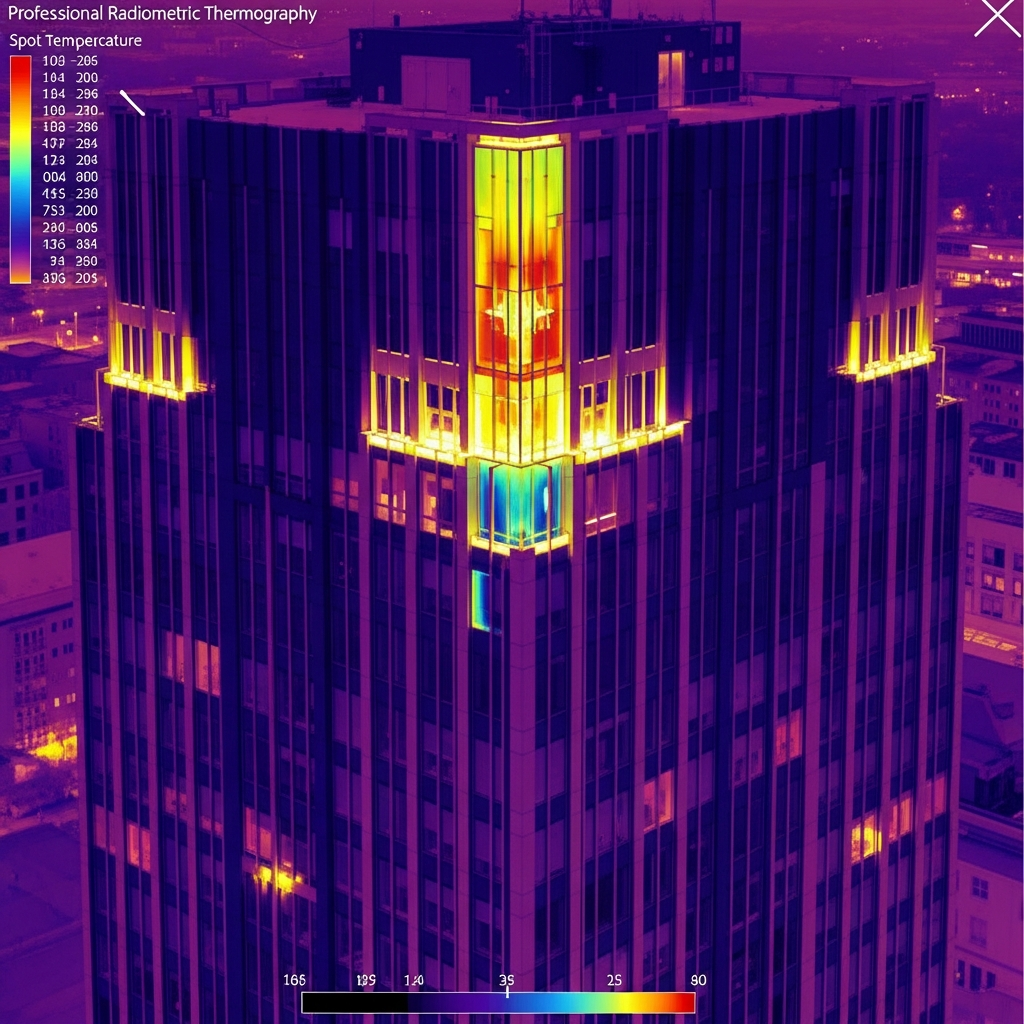
Infrared Building Facade Inspection
Commercial façade thermography with paired RGB context and annotated reporting of observed thermal patterns and potential anomalies.
Overview
Exterior radiometric thermography can help identify temperature patterns that may be consistent with thermal bridging, insulation anomalies, potential air leakage, or moisture-related conditions. Holmes and Watson pairs thermal capture with RGB imagery and documents observations in a professional report. These are indicators for review—not proof of a specific defect or water intrusion. Any diagnosis may require building history, interior observations, or hands-on testing.
Why Choose Drone Facade & Envelope Thermography
A drone facade scan finishes in hours what scaffold-based inspection takes weeks to do. The non-invasive nature is critical for historic envelopes, occupied tenant buildings, and facades where mechanical anchoring would itself cause damage.
When to use it: Use facade thermography during commercial real estate acquisition due diligence, when chasing recurring tenant comfort complaints, before major envelope capital decisions, after any envelope-affecting weather event, and as part of an annual envelope condition program.
What We Inspect
- Curtain walls and unitized glass facades
- Masonry, brick, and CMU exteriors
- Window seals and glazing systems
- EIFS and stucco cladding
- Metal panel systems
- Expansion joints and through-wall flashing
Our Process
Assessment
Reviewing building drawings, prior thermal data, and tenant complaint history; planning vertical flight grids around airspace and adjacent structures.
Capture
Capturing radiometric thermal and RGB imagery of agreed exterior areas, subject to safe flight and suitable conditions.
Review
Comparing paired imagery and documenting observed patterns, limitations, and potential follow-up questions.
Delivery
Providing an annotated professional PDF report for facility teams, engineers, energy firms, or other project partners.
Deliverables
A professional annotated PDF report with paired RGB and radiometric thermal imagery and qualified observations. Stitched thermal elevations are not a standard deliverable; thermal orthomosaics and 3D thermal models/point clouds are not currently offered.
Cost Factors
- Building height and total facade square footage
- Number of elevations and complexity of geometry
- Airspace authorization (Class B/C airspace adds coordination)
- Number of elevations, site access, flight conditions, and requested report detail
- Combined roof + facade missions are significantly cheaper than separate visits
Frequently Asked Questions
Related Services
Industries We Serve
Facade & Envelope Thermography by Service Area
Request Facade & Envelope Thermography
Get a detailed proposal and flight plan for your specific asset.
Get a Quote (540) 632-3458Trust Signals
- • FAA Part 107 Certified Pilots
- • NACHI Thermography Certified
- • Licensed NC Building Class Contractors
- • 20+ Active Industry Certifications
- • Fully Insured for Commercial Operations