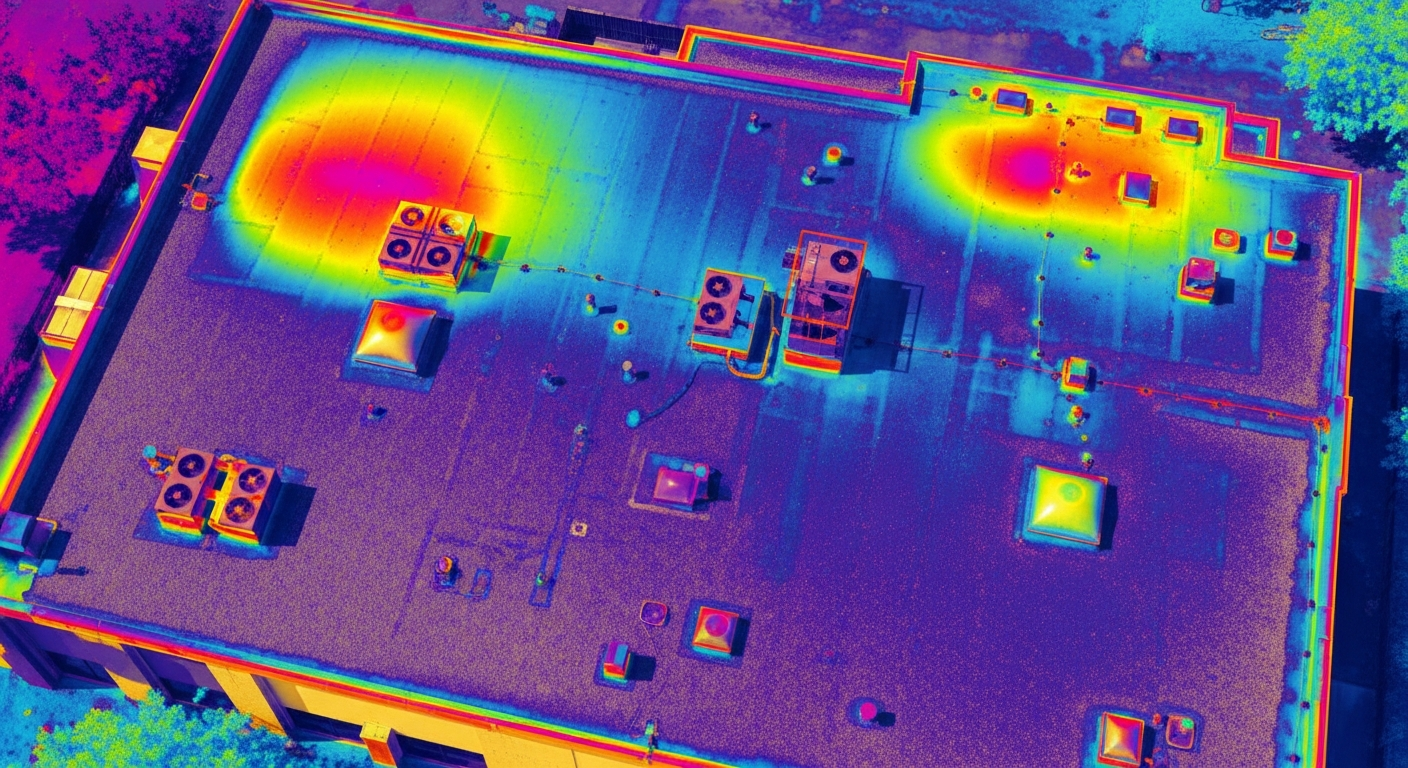
Thermal Drone Roof Inspection
Radiometric thermal roof inspections with paired RGB imagery and annotated reporting. Identify patterns that may warrant closer evaluation.
Overview
Radiometric thermal capture can help flag roof areas with temperature patterns that may be consistent with moisture-related or insulation anomalies. Holmes and Watson pairs thermal imagery with RGB context and reviews findings in light of flight conditions and visible conditions. Infrared imagery alone does not confirm water intrusion or the cause of an anomaly; reports distinguish observed patterns from possible explanations and identify where follow-up may be useful.
Why Choose Drone Thermal Roof Inspections
Aerial radiometric capture gives commercial property teams broad exterior coverage without walking the roof. Paired visual context and careful, qualified reporting help teams decide where an on-site check or additional testing may be worthwhile.
When to use it: Use thermal roof inspection annually for commercial portfolios, after any major weather event, before major roof capital decisions, before acquisition due diligence, and when you suspect moisture but visual inspection isn't conclusive.
What We Inspect
- EPDM, TPO, PVC, and Built-Up Roofing (BUR)
- Modified bitumen and metal roof systems
- Potential insulation anomalies and thermal bridging patterns
- HVAC envelope integration and ductwork
- Flashing, parapets, and drainage systems
- Skylight and penetration sealing
Our Process
Flight Planning
We map the roof, secure FAA airspace authorization (LAANC), and confirm site access and safety with the property manager.
Data Acquisition
Flights are conducted post-sunset to capture optimal thermal contrast as the roof cools and wet insulation retains heat.
Analysis
A thermography-trained reviewer compares radiometric patterns with paired visual imagery and notes relevant conditions or limits.
Reporting
Delivery of a professional annotated PDF report with paired RGB and thermal imagery. Findings describe observed patterns and potential interpretations, not confirmed causes.
Deliverables
A professional annotated PDF report, paired RGB and radiometric thermal imagery, and a prioritized description of thermal patterns that may warrant follow-up. Thermal orthomosaics are not part of the standard deliverable while the processing workflow is being established.
Cost Factors
- Total roof square footage and number of buildings on site
- Airspace requirements (controlled airspace authorizations add coordination time)
- Site access, safety, and any required escort
- One-off survey vs. recurring annual program (recurring is significantly cheaper per visit)
- Reporting scope and any requested follow-up coordination
Frequently Asked Questions
Related Services
Industries We Serve
Thermal Roof Inspections by Service Area
Request Thermal Roof Inspections
Get a detailed proposal and flight plan for your specific asset.
Get a Quote (540) 632-3458Trust Signals
- • FAA Part 107 Certified Pilots
- • NACHI Thermography Certified
- • Licensed NC Building Class Contractors
- • 20+ Active Industry Certifications
- • Fully Insured for Commercial Operations