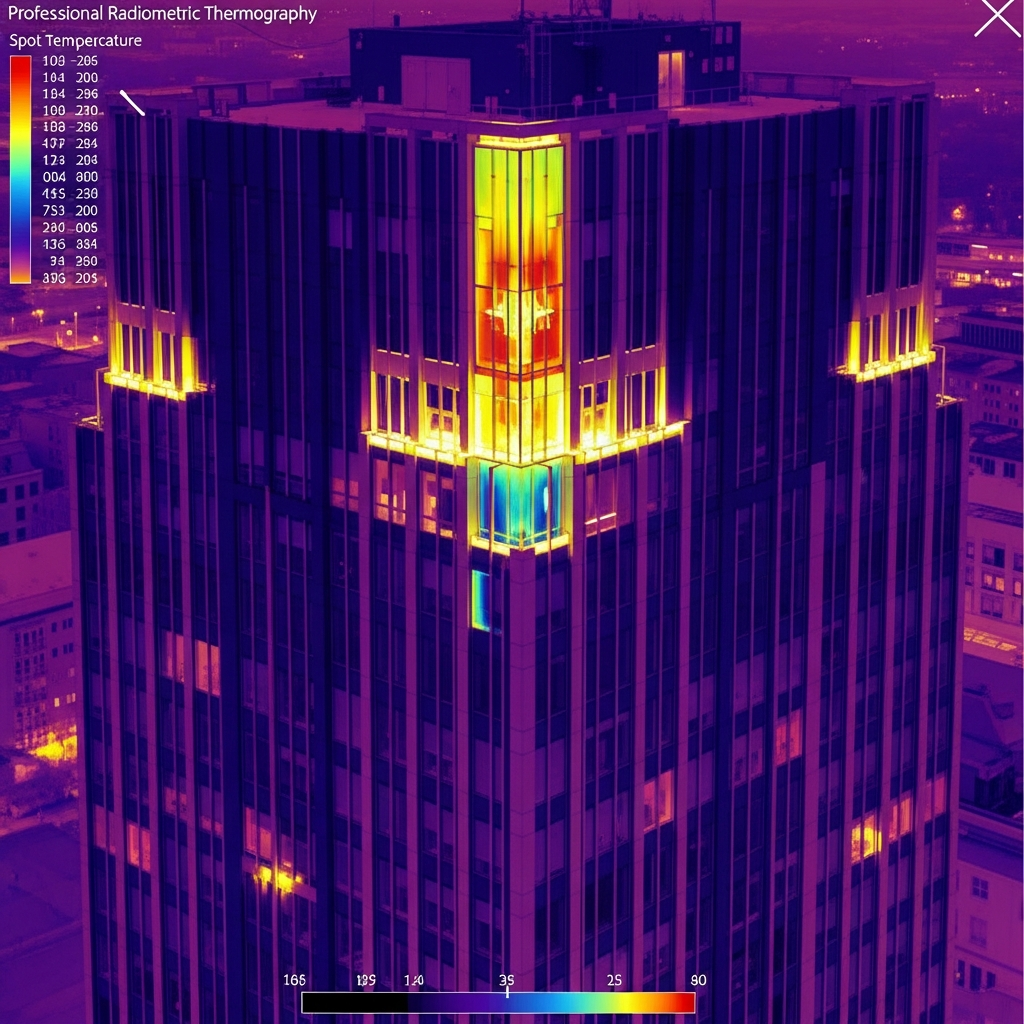
Facade & Envelope Thermography in Durham, NC
Facade & Envelope Thermography for Durham & Durham County commercial property — 100–115 minutes from our Winston-Salem HQ. Expertise in both historic.
Facade & Envelope Thermography for Durham & Durham County
Holmes and Watson provides Facade & Envelope Thermography across Durham and Durham County — typically a 100–115 minutes mobilization from our Winston-Salem headquarters into the Research Triangle. We routinely fly across Downtown Durham, American Tobacco Campus, and Brightleaf, and we coordinate FAA airspace authorizations and property-management access for every job.
Durham's commercial inventory is heavily warehouse-conversion brick and timber downtown, modern research and life-sciences in the RTP corridor, and a substantial Duke campus footprint. Roof and envelope assemblies vary widely — some are 100 years old, some are five — which is exactly the kind of mix where a single defensible thermal data set replaces a half-dozen guesses. Within that mix, Facade & Envelope Thermography addresses a drone facade scan finishes in hours what scaffold-based inspection takes weeks to do.
Durham Service Area Coverage
Durham sits in Durham County, part of the Research Triangle (a 100–115 minutes drive from our Winston-Salem headquarters). We work across Downtown Durham, American Tobacco Campus, Brightleaf, Trinity Park, and Duke Forest and surrounding communities, with full Facade & Envelope Thermography coverage of ZIP codes 27701, 27703, 27704, 27705 and beyond.
Mobilization: 100–115 minutes from our Holmes and Watson Inspection Agency headquarters in Winston-Salem. Mobilization timing depends on crew availability, weather, and FAA airspace conditions — we do not guarantee a fixed response window.
Why Durham Properties Use Drone Facade & Envelope Thermography
Historic and institutional envelopes often call for non-invasive first-pass documentation. Drone-based thermography can record exterior thermal patterns without installing scaffold anchors, while qualified follow-up remains necessary to confirm causes.
Historic and institutional envelopes often call for non-invasive first-pass documentation. Drone-based thermography can record exterior thermal patterns without installing scaffold anchors, while qualified follow-up remains necessary to confirm causes. Teams in Durham typically use facade thermography during commercial real estate acquisition due diligence, when chasing recurring tenant comfort complaints, before major envelope capital decisions, after any envelope-affecting weather event, and as part of an annual envelope condition program.
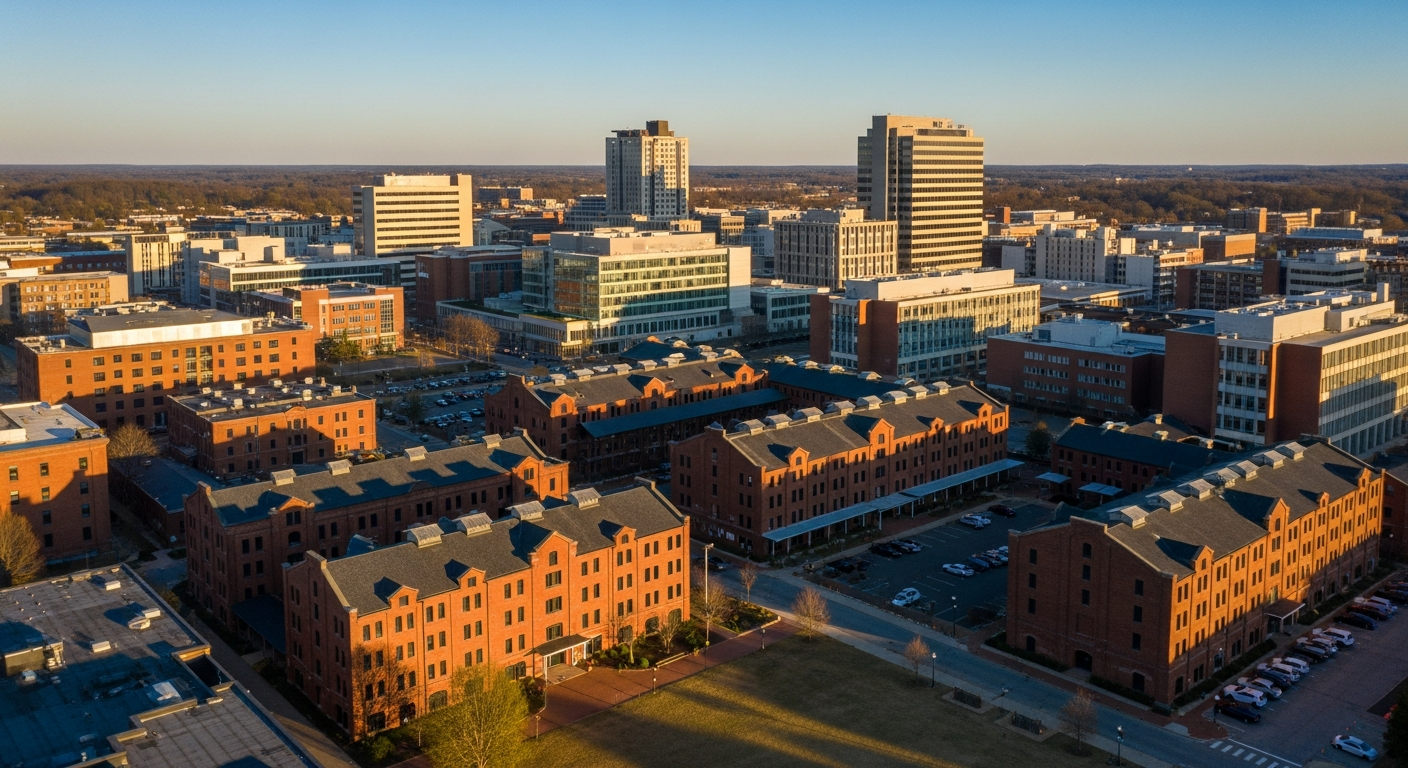
Recent Research Triangle Facade & Envelope Thermography Project Examples
Tobacco-Era Warehouse Conversion Envelope Study
Paired thermal and RGB study of a historic brick warehouse, documenting moisture-related patterns for further envelope investigation.
What We Inspect on Durham Facade & Envelope Thermography Projects
- Curtain walls and unitized glass facades
- Masonry, brick, and CMU exteriors
- Window seals and glazing systems
- EIFS and stucco cladding
- Metal panel systems
- Expansion joints and through-wall flashing
Our Facade & Envelope Thermography Process
Assessment
Reviewing building drawings, prior thermal data, and tenant complaint history; planning vertical flight grids around airspace and adjacent structures.
Capture
Capturing radiometric thermal and RGB imagery of agreed exterior areas, subject to safe flight and suitable conditions.
Review
Comparing paired imagery and documenting observed patterns, limitations, and potential follow-up questions.
Delivery
Providing an annotated professional PDF report for facility teams, engineers, energy firms, or other project partners.
Deliverables
A professional annotated PDF report with paired RGB and radiometric thermal imagery and qualified observations. Stitched thermal elevations are not a standard deliverable; thermal orthomosaics and 3D thermal models/point clouds are not currently offered.
Durham Facade & Envelope Thermography Cost & Scheduling Factors
Regional considerations specific to Durham:
- Mobilization: 100–115 minutes from our Winston-Salem headquarters into the Research Triangle. Multi-job sequencing in the area can offset travel cost when scheduling allows.
- Controlled airspace (Class B/C) around major metro airports requires LAANC authorization, which we obtain before each flight inside the surface area.
- Radiometric thermal scans require specific flight windows (typically post-sunset for roofs, peak-production for solar) to achieve reliable thermal contrast — scheduling considers your asset and ambient conditions.
General Facade & Envelope Thermography cost factors:
- Building height and total facade square footage
- Number of elevations and complexity of geometry
- Airspace authorization (Class B/C airspace adds coordination)
- Number of elevations, site access, flight conditions, and requested report detail
- Combined roof + facade missions are significantly cheaper than separate visits
Frequently Asked Questions
Related Services
Industries We Serve
Facade & Envelope Thermography Across NC
Request Facade & Envelope Thermography in Durham
Get a detailed proposal and flight plan for your specific asset.
Get a Quote (540) 632-3458Trust Signals
- • FAA Part 107 Certified Pilots
- • NACHI Thermography Certified
- • Licensed NC Building Class Contractors
- • 20+ Active Industry Certifications
- • Fully Insured for Commercial Operations