Facade & Envelope Thermography in Wilmington, NC
Facade & Envelope Thermography for Wilmington & New Hanover County commercial property — 3.5–4 hours from our Winston-Salem HQ. Coastal infrastructure.
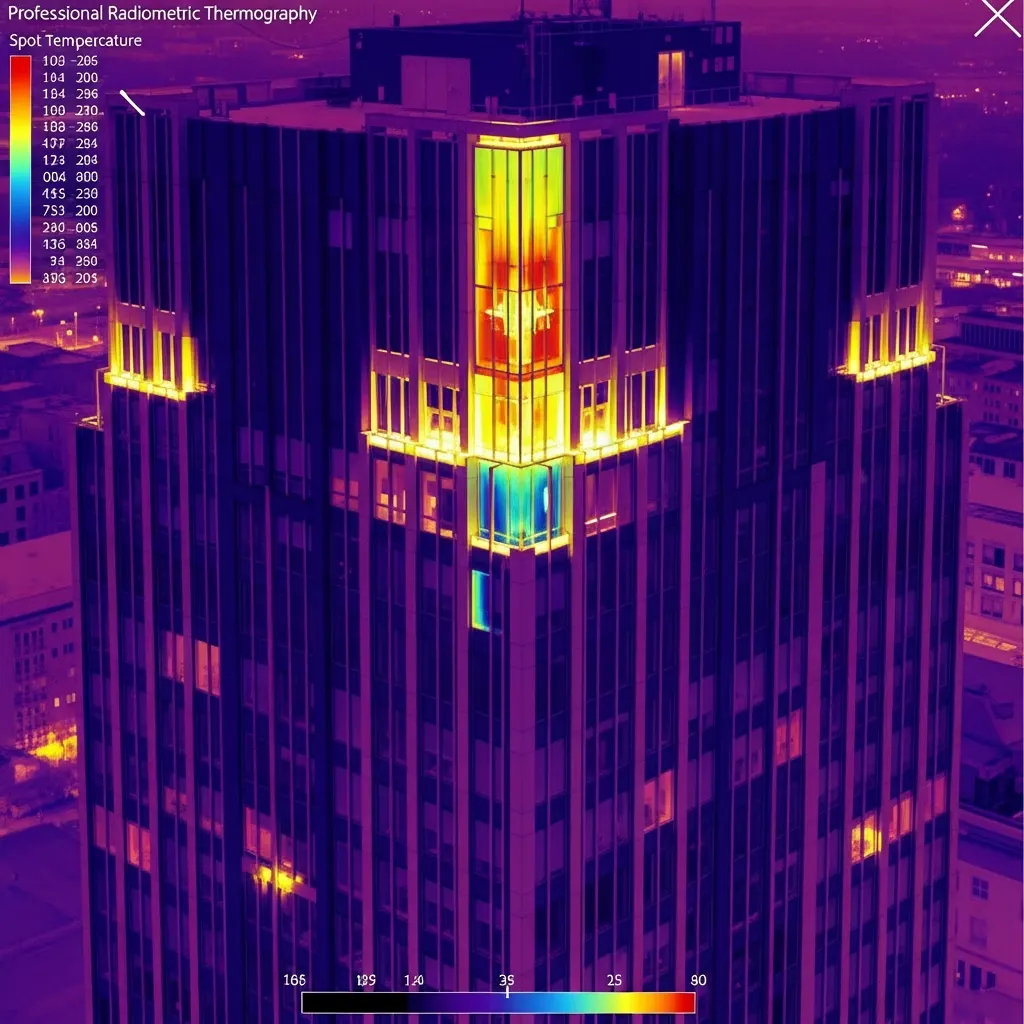
Background thermal imagery is illustrative, not a customer inspection record.
Facade & Envelope Thermography for Wilmington & New Hanover County
Holmes and Watson provides Facade & Envelope Thermography across Wilmington and New Hanover County — typically a 3.5–4 hours mobilization from our Winston-Salem headquarters into the NC Coast / Cape Fear. We routinely fly across Downtown Wilmington, Riverwalk, and Mayfaire, and we coordinate FAA airspace authorizations and property-management access for every job.
Wilmington's commercial market includes a substantial historic downtown stock, modern Mayfaire-area retail and office, and a heavy industrial and port logistics footprint along the Cape Fear River. Salt air and hurricane exposure define the inspection cadence — and post-storm work surges every season. Within that mix, Facade & Envelope Thermography addresses this is not a complete energy audit, blower-door test, definitive diagnosis, quantified heat-loss calculation or energy-savings guarantee.
Wilmington Service Area Coverage
Wilmington sits in New Hanover County, part of the NC Coast / Cape Fear (a 3.5–4 hours drive from our Winston-Salem headquarters). We work across Downtown Wilmington, Riverwalk, Mayfaire, Wrightsville Beach, and Carolina Beach and surrounding communities, with full Facade & Envelope Thermography coverage of ZIP codes 28401, 28403, 28405, 28409 and beyond.
Mobilization: 3.5–4 hours from our Holmes and Watson Inspection Agency headquarters in Winston-Salem. Mobilization timing depends on crew availability, weather, and FAA airspace conditions — we do not guarantee a fixed response window.
Why Wilmington Properties Use Drone Facade & Envelope Thermography
Hurricane-damaged roofs are dangerous to walk. Adjusters and owners need objective, time-stamped aerial documentation as soon as it is safe to fly, and traditional roof crews can't keep up with demand during a regional event. Drone inspection produces defensible evidence for the claims process as quickly as conditions allow.
Hurricane-damaged roofs are dangerous to walk. Adjusters and owners need objective, time-stamped aerial documentation as soon as it is safe to fly, and traditional roof crews can't keep up with demand during a regional event. Drone inspection produces defensible evidence for the claims process as quickly as conditions allow. Useful when the interior/exterior thermal differential and exterior access support the agreed question. Share building use, affected elevations, operating conditions, comfort complaints and any drawings. Solar loading, glass reflections and inaccessible areas can limit interpretation.

What We Inspect on Wilmington Facade & Envelope Thermography Projects
- Agreed exterior walls, windows and junctions
- Patterns potentially consistent with thermal bridging or insulation anomalies
- Temperature differences needing review for possible air leakage
- Visual context for envelope follow-up questions
Our Facade & Envelope Thermography Process
Agree on the scope
Review the asset address, approximate size, inspection question, permissions, access constraints and intended report audience before quoting.
Review envelope conditions
Plan around inside/outside temperature difference, wind, rain, solar exposure, surface reflections, neighboring structures and safe standoff. We document constraints rather than assuming every elevation is interpretable.
Document and hand over
Organize the agreed imagery and annotated report, record coverage limitations and identify observations that warrant specialist follow-up.
Deliverables
Paired RGB and radiometric exterior thermal imagery and an annotated PDF documenting observed patterns, coverage and limitations for energy or envelope assessment.
Wilmington Facade & Envelope Thermography Cost & Scheduling Factors
Regional considerations specific to Wilmington:
- Mobilization: 3.5–4 hours from our Winston-Salem headquarters into the NC Coast / Cape Fear. Multi-job sequencing in the area can offset travel cost when scheduling allows.
- Coastal exposure: salt air typically accelerates envelope wear, so capital-planning intervals are often shorter than for inland counterparts.
- Radiometric thermal scans require specific flight windows (typically post-sunset for roofs, peak-production for solar) to achieve reliable thermal contrast — scheduling considers your asset and ambient conditions.
General Facade & Envelope Thermography cost factors:
- Asset size and agreed coverage
- Site access, airspace and acquisition conditions
- Reporting scope and requested visit cadence
Frequently Asked Questions
Related Services
Industries We Serve
Request Facade & Envelope Thermography in Wilmington
Get a detailed proposal and flight plan for your specific asset.
Get a Quote (540) 632-3458Trust Signals
- • FAA Part 107 Certified Pilots
- • NACHI Thermography Certified
- • Licensed NC Building Class Contractors
- • 20+ Active Industry Certifications
- • Fully Insured for Commercial Operations