Solar Thermography in Greenville, NC
Solar Thermography for Greenville & Pitt County commercial property — 3.5 hours from our Winston-Salem HQ. Maximize solar farm output. Identify defective.
Solar Thermography for Greenville & Pitt County
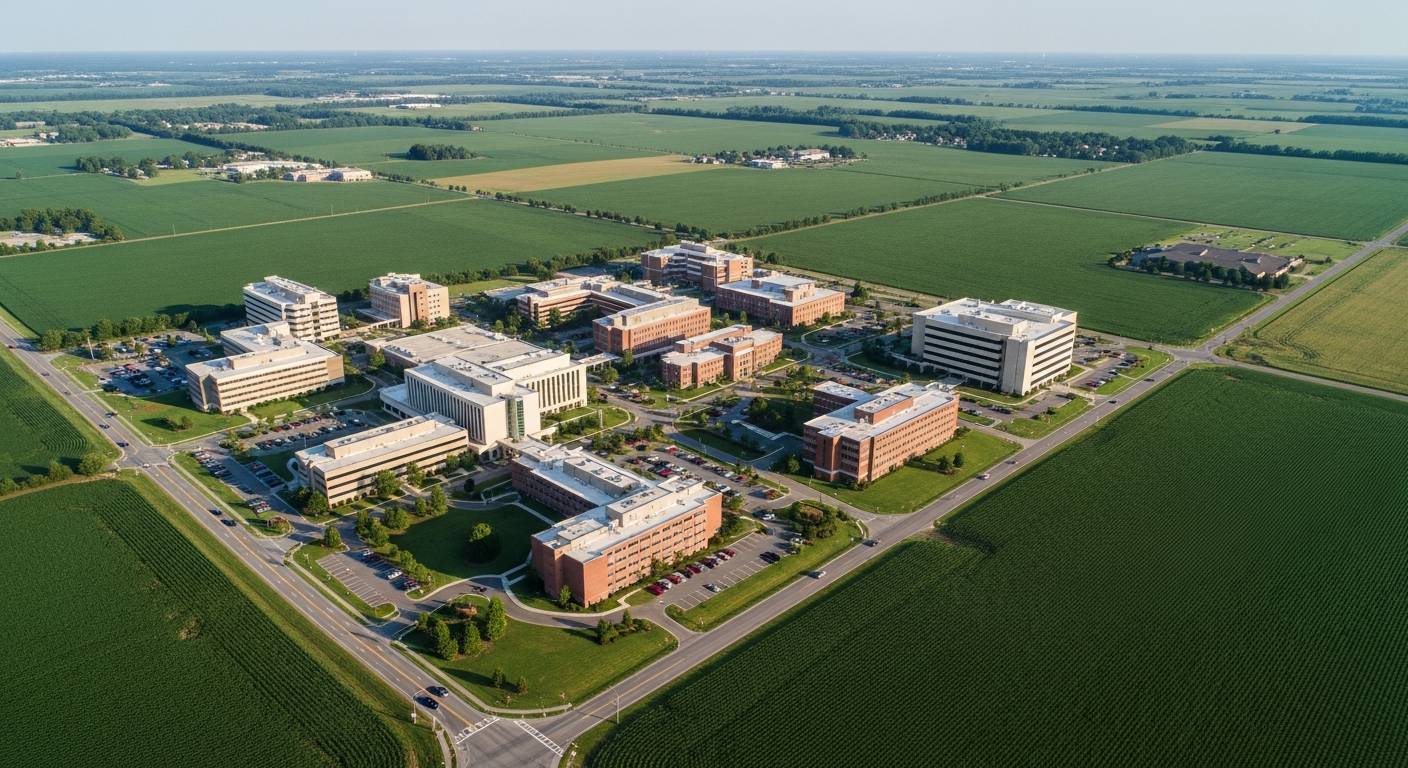
Holmes and Watson provides Solar Thermography across Greenville and Pitt County — typically a 3.5 hours mobilization from our Winston-Salem headquarters into the Eastern NC / Inner Coastal Plain. We routinely fly across Downtown Greenville, ECU campus area, and Winterville, and we coordinate FAA airspace authorizations and property-management access for every job.
Greenville's commercial inventory is split between medical, university-adjacent, and a substantial agricultural-services economy. Surrounding Pitt County is heavily row-crop and livestock — exactly the kind of operation where thermal aerial scouting catches irrigation, drainage, and stand-emergence issues before yield loss. Within that mix, Solar Thermography addresses aerial thermography is the only practical way to inspect a utility-scale solar farm comprehensively.
Greenville Service Area Coverage
Greenville sits in Pitt County, part of the Eastern NC / Inner Coastal Plain (a 3.5 hours drive from our Winston-Salem headquarters). We work across Downtown Greenville, ECU campus area, Winterville, Ayden, and Bethel and surrounding communities, with full Solar Thermography coverage of ZIP codes 27834, 27858, 27889 and beyond.
Mobilization: 3.5 hours from our Holmes and Watson Inspection Agency headquarters in Winston-Salem. Mobilization timing depends on crew availability, weather, and FAA airspace conditions — we do not guarantee a fixed response window.
Why Greenville Properties Use Drone Solar Thermography
Eastern NC growers face large fields, narrow weather windows, and equipment too valuable to leave broken in the field. Aerial thermal scouting catches a stuck pivot, a plugged tile, or a downed animal in minutes instead of days.
Eastern NC growers face large fields, narrow weather windows, and equipment too valuable to leave broken in the field. Aerial thermal scouting catches a stuck pivot, a plugged tile, or a downed animal in minutes instead of days. Teams in Greenville typically use solar thermography annually for O&M, post-installation commissioning, after hail or severe weather events, prior to acquisition or warranty disputes, and when sudden production drops indicate undiagnosed array failures.
Recent Eastern NC / Inner Coastal Plain Solar Thermography Project Examples
Eastern NC Solar Installation Audit
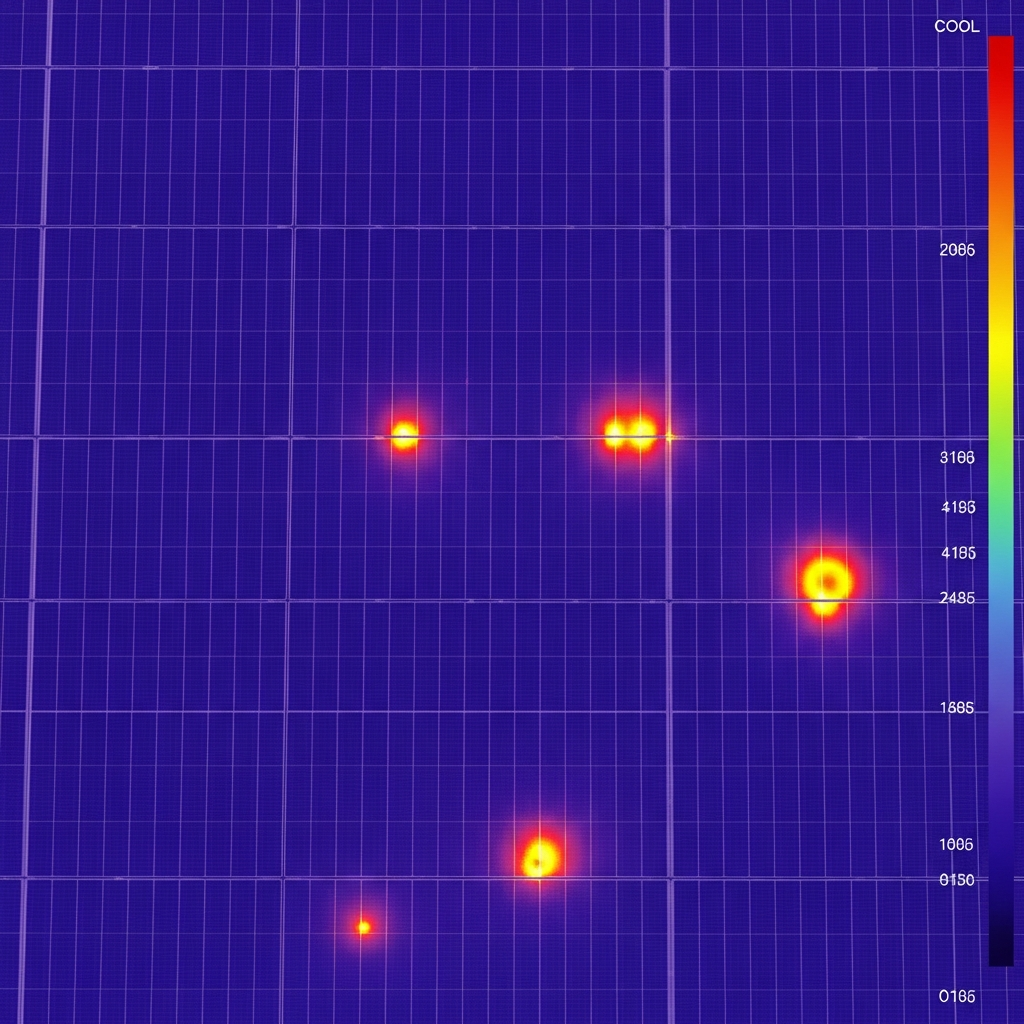
Radiometric aerial thermography of a commercial solar installation identifying string-level underperformance and defective cells.
What We Inspect on Greenville Solar Thermography Projects
- Individual cell hot spots and micro-cracks
- Activated bypass diodes and submodule failures
- Offline strings and combiner box anomalies
- PID (Potential Induced Degradation) patterns
- Vegetation shading and soiling issues
- Tracker and inverter heat anomalies
Our Solar Thermography Process
Standardization
Flights conducted under IEC-compliant irradiance levels (>600 W/m²) with verified module orientation and clear-sky conditions.
Rapid Scanning
Multi-rotor flights with paired radiometric thermal and high-resolution RGB payloads cover full arrays efficiently.
AI-Assisted Analysis
Automated defect detection algorithms classify anomalies by severity and type, then verified by certified thermographers.
Integration
Exporting localized defect coordinates directly to your CMMS or asset management software.
Deliverables
A professional annotated PDF report with paired RGB and radiometric thermal imagery and a prioritized description of observed patterns for O&M review. Digital twins, thermal orthomosaics, estimated power-loss calculations, and CMMS integrations are not included as standard deliverables.
Greenville Solar Thermography Cost & Scheduling Factors
Regional considerations specific to Greenville:
- Mobilization: 3.5 hours from our Winston-Salem headquarters into the Eastern NC / Inner Coastal Plain. Multi-job sequencing in the area can offset travel cost when scheduling allows.
- Open agricultural and rural airspace generally offers favorable operating conditions; agricultural cadence is sequenced around growing-season windows.
- Radiometric thermal scans require specific flight windows (typically post-sunset for roofs, peak-production for solar) to achieve reliable thermal contrast — scheduling considers your asset and ambient conditions.
General Solar Thermography cost factors:
- Site capacity (MW) and total module count
- Site geometry complexity (single-axis tracking, terrain)
- Annual program vs. one-off scan (annual programs are significantly cheaper per visit)
- Reporting depth and CMMS integration requirements
Frequently Asked Questions
Related Services
Request Solar Thermography in Greenville
Get a detailed proposal and flight plan for your specific asset.
Get a Quote (540) 632-3458Trust Signals
- • FAA Part 107 Certified Pilots
- • NACHI Thermography Certified
- • Licensed NC Building Class Contractors
- • 20+ Active Industry Certifications
- • Fully Insured for Commercial Operations