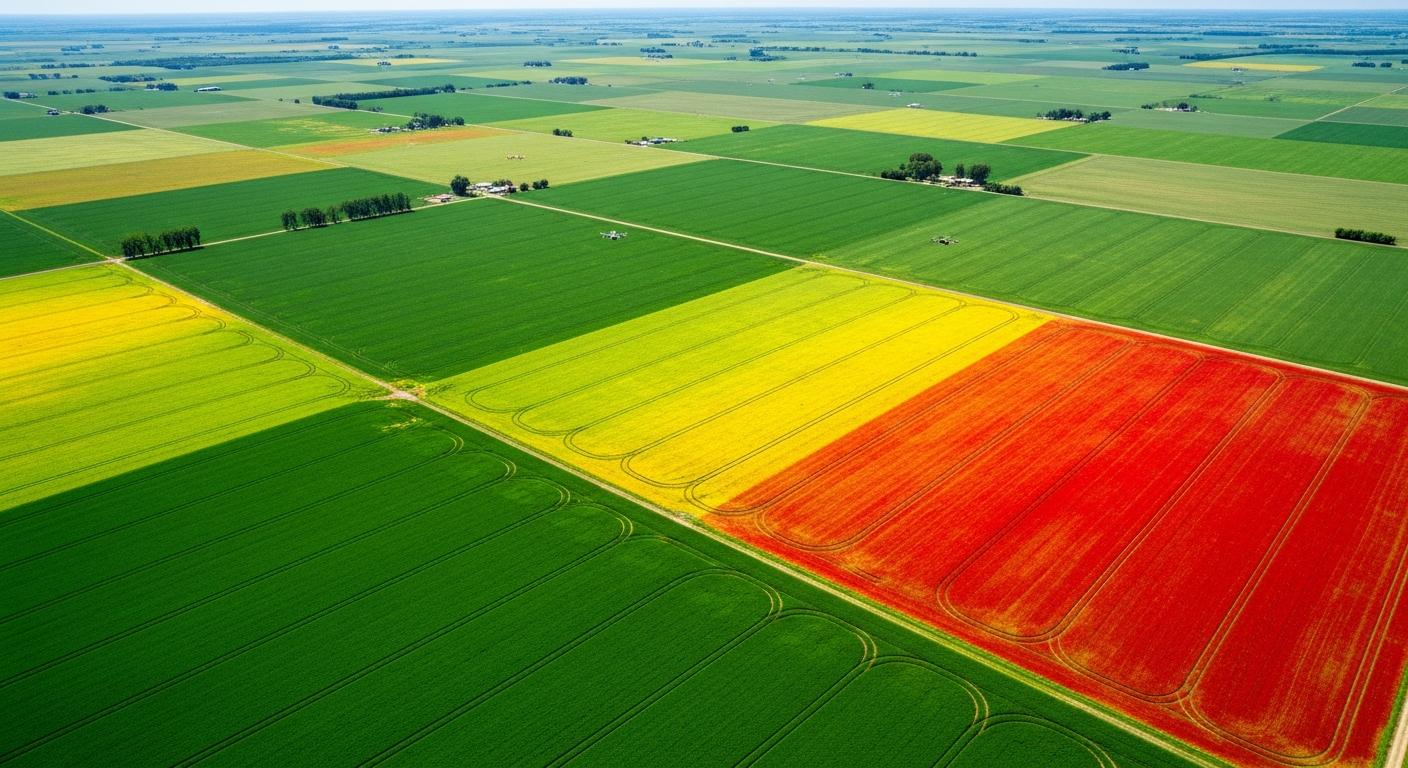
Agricultural Aerial Inspections in Durham, NC
Agricultural Aerial Inspections for Durham & Durham County commercial property — 100–115 minutes from our Winston-Salem HQ. Aerial thermal and high-res.
Agricultural Aerial Inspections for Durham & Durham County
Holmes and Watson provides Agricultural Aerial Inspections across Durham and Durham County — typically a 100–115 minutes mobilization from our Winston-Salem headquarters into the Research Triangle. We routinely fly across Downtown Durham, American Tobacco Campus, and Brightleaf, and we coordinate FAA airspace authorizations and property-management access for every job.
Durham's commercial inventory is heavily warehouse-conversion brick and timber downtown, modern research and life-sciences in the RTP corridor, and a substantial Duke campus footprint. Roof and envelope assemblies vary widely — some are 100 years old, some are five — which is exactly the kind of mix where a single defensible thermal data set replaces a half-dozen guesses. Within that mix, Agricultural Aerial Inspections addresses walking every acre is impossible; flying every acre is routine.
Durham Service Area Coverage
Durham sits in Durham County, part of the Research Triangle (a 100–115 minutes drive from our Winston-Salem headquarters). We work across Downtown Durham, American Tobacco Campus, Brightleaf, Trinity Park, and Duke Forest and surrounding communities, with full Agricultural Aerial Inspections coverage of ZIP codes 27701, 27703, 27704, 27705 and beyond.
Mobilization: 100–115 minutes from our Holmes and Watson Inspection Agency headquarters in Winston-Salem. Mobilization timing depends on crew availability, weather, and FAA airspace conditions — we do not guarantee a fixed response window.
Why Durham Properties Use Drone Agricultural Aerial Inspections
Historic and institutional envelopes often call for non-invasive first-pass documentation. Drone-based thermography can record exterior thermal patterns without installing scaffold anchors, while qualified follow-up remains necessary to confirm causes.
Historic and institutional envelopes often call for non-invasive first-pass documentation. Drone-based thermography can record exterior thermal patterns without installing scaffold anchors, while qualified follow-up remains necessary to confirm causes. Teams in Durham typically use agricultural aerial inspection for in-season scouting (especially during pivot operation and after storms), pre-harvest stand verification, post-storm damage documentation, and as part of a recurring season-long scouting program.

What We Inspect on Durham Agricultural Aerial Inspections Projects
- Irrigation system performance and pivot/leak detection (thermal)
- Field drainage, ponding, and ditch condition mapping
- Stand counts, emergence verification, and replant zones
- Crop water-stress hot spots flagged by thermal contrast
- Livestock location, count, and welfare checks
- Storm, hail, and flood damage documentation
Our Agricultural Aerial Inspections Process
Mission Planning
Walk the operation with the grower, map field boundaries, and define which fields, structures, or herds need recurring eyes on them.
Paired Thermal + RGB Capture
Autonomous grid flights collect radiometric thermal and high-resolution visual imagery in a single pass.
Anomaly Identification
We mark thermal water-stress zones, drainage problems, broken irrigation, livestock concerns, and damaged sections of field.
Field-Ready Reporting
Paired imagery and an annotated PDF describing observed patterns and locations that may merit a ground check.
Deliverables
Paired RGB and thermal imagery, an annotated PDF report, and a prioritized list of observed patterns for follow-up. Thermal orthomosaics are not part of the standard deliverable.
Durham Agricultural Aerial Inspections Cost & Scheduling Factors
Regional considerations specific to Durham:
- Mobilization: 100–115 minutes from our Winston-Salem headquarters into the Research Triangle. Multi-job sequencing in the area can offset travel cost when scheduling allows.
- Controlled airspace (Class B/C) around major metro airports requires LAANC authorization, which we obtain before each flight inside the surface area.
General Agricultural Aerial Inspections cost factors:
- Total acreage and field clustering
- Recurring program vs. one-off scout
- Reporting depth (basic anomaly punch list vs. integrated agronomy reporting)
Frequently Asked Questions
Related Services
Industries We Serve
Agricultural Aerial Inspections Across NC
Request Agricultural Aerial Inspections in Durham
Get a detailed proposal and flight plan for your specific asset.
Get a Quote (540) 632-3458Trust Signals
- • FAA Part 107 Certified Pilots
- • NACHI Thermography Certified
- • Licensed NC Building Class Contractors
- • 20+ Active Industry Certifications
- • Fully Insured for Commercial Operations